


After 4 weeks of daily use across Bangalore traffic, metro rides, cafés, and a short domestic flight, the Nothing Headphone (1) feels surprisingly mature. It blends standout design, long battery life, and clean, KEF-tuned sound into a package that undercuts flagship pricing without feeling compromised.
Table of Contents
Typical India price: ₹21,999 MRP, often available closer to ₹19,999 during major sale periods.
Tested in: Indiranagar, Bangalore – 4 weeks mixed use (Bluetooth LDAC + wired 3.5mm & USB-C).
1. Introduction & First Impressions
What surprised me most about the Nothing Headphone (1) is how mature it feels. Despite the playful transparent design, it delivers an almost flagship-level experience in sound, ANC, and battery — and it actually holds up in daily Indian conditions.
In simple terms, this is a do-it-all over-ear headphone. It works just as well for Spotify and Netflix as it does for flights, long calls, and even wired editing on a laptop — without demanding Sony or Bose-level pricing. I’d recommend it primarily to Android users who value clean design and balanced sound over heavy, thumping bass.
I regularly test and compare ANC headphones across different price segments, from flagship Sony and Bose models to more affordable Indian brands. Over the past month, I’ve used the Nothing Headphone (1) daily in Indiranagar cafés, noisy Bangalore traffic, metro rides, and on a short domestic flight — switching between LDAC wireless and wired 3.5 mm modes to see how it performs across real-world scenarios.

2. Product Overview & Specifications
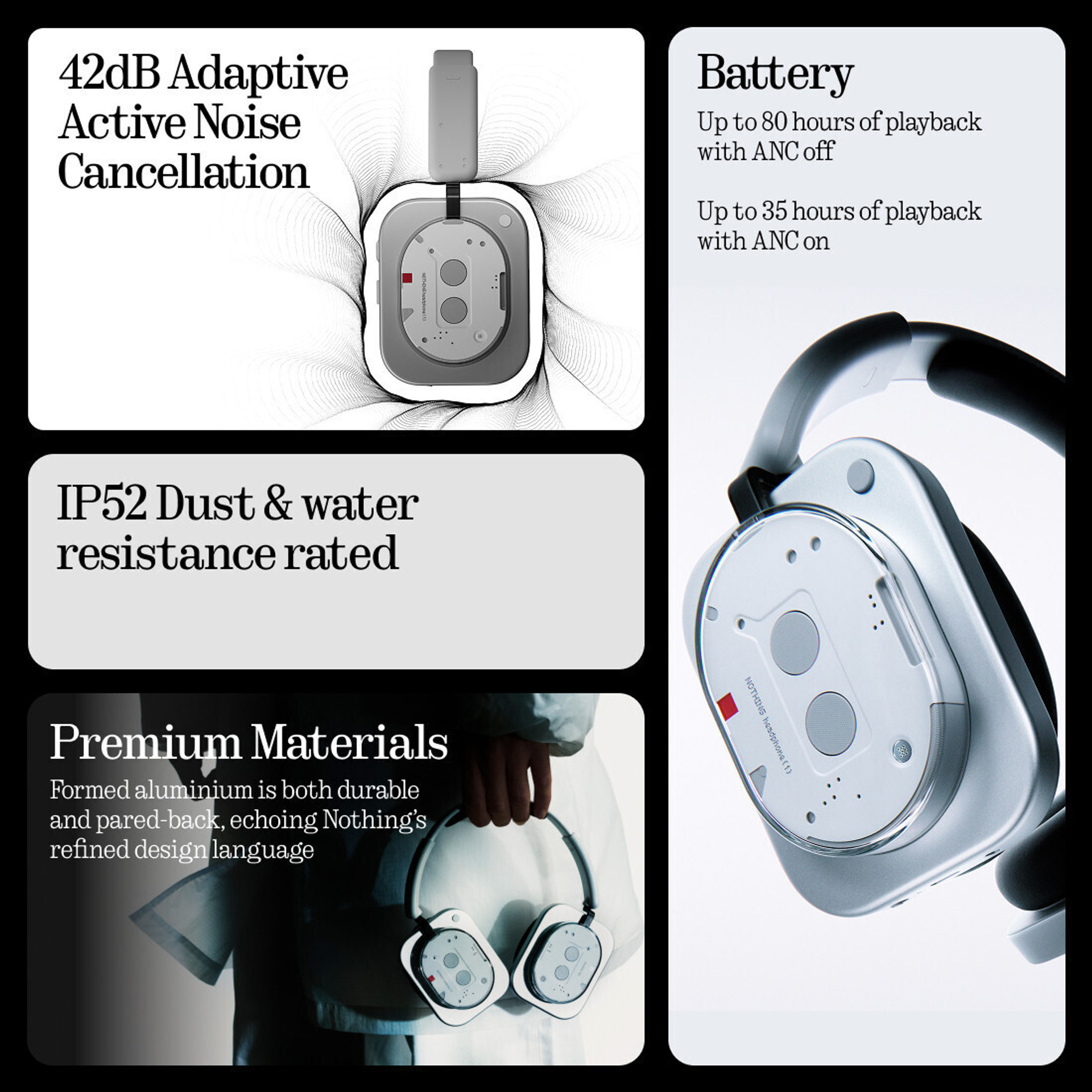
The Nothing Headphone (1) is a closed-back over-ear headphone that supports both wireless and wired listening. It features 40 mm dynamic drivers tuned in collaboration with KEF, adaptive ANC rated up to 42 dB, LDAC hi-res audio support, and an impressive claimed battery life of up to 80 hours.
What’s in the Box
- Nothing Headphone (1) headset with transparent-and-metal design
- Slim soft-shell carry case
- USB-C charging cable (also supports USB-C audio)
- 3.5 mm to 3.5 mm cable for wired listening
- User guide and warranty documentation
The inclusion of both 3.5 mm and USB-C audio is especially useful if you switch between phones, laptops, and editing setups.
Key Specifications That Actually Matter
- 📌 40 mm customised dynamic drivers, tuned with KEF
- 📌 Frequency response: 20 Hz – 40 kHz
- 📌 Bluetooth 5.3 with AAC, SBC, LDAC and dual-device multipoint
- 📌 Up to 42 dB adaptive ANC with transparency mode
- 📌 Battery life: ~80 hours (ANC off), ~35 hours (ANC on)
- 📌 Fast charging: 5 minutes ≈ 5 hours playback (ANC off)
- 📌 Weight: ~329 g
- 📌 IP52 rating for dust and light rain resistance
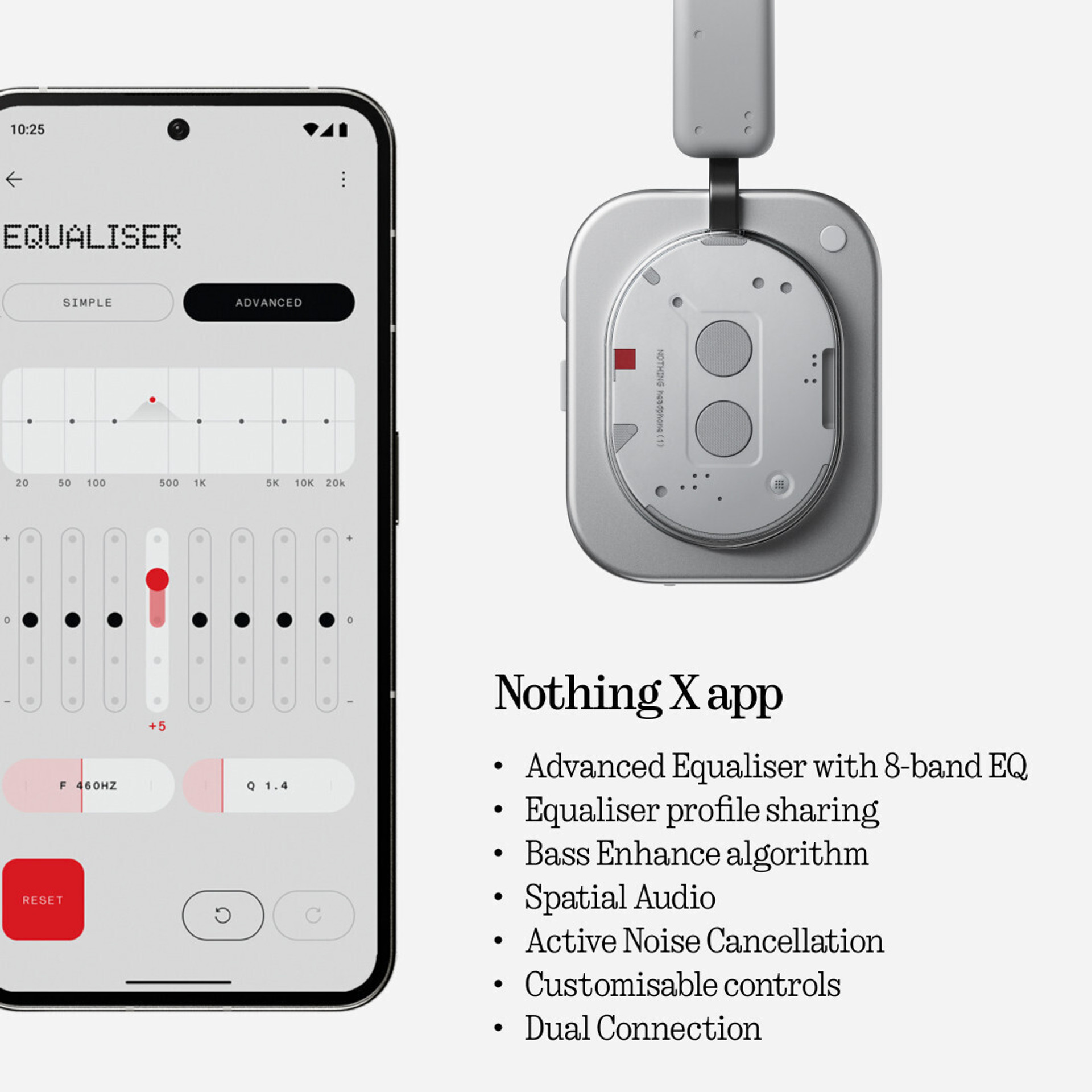
- 📌 8-band EQ in the Nothing X app with sharable presets
These aren’t just marketing numbers — they place the Nothing Headphone (1) firmly in mid-premium territory rather than entry-level ANC.
Price Point & Value in India
In India, the official MRP is around ₹21,999, but real-world selling prices often hover closer to ₹19,999 during sale periods. Occasionally, large festival events push it even lower.
At that price, it sits comfortably below flagship models like Sony’s WH-1000XM series and Bose QuietComfort, while offering significantly better build, tuning, and features than most mass-market options from boAt, Noise, or CrossBeats.
This is important: it’s not trying to beat Sony or Bose at everything. It’s trying to deliver 80–85% of that experience at a noticeably lower cost — and mostly succeeds.
Target Audience
The Nothing Headphone (1) makes the most sense for:
- Android users who want LDAC, strong ANC, and distinctive design without paying flagship prices
- Students and creators who need wired connectivity plus long battery life for travel and editing
- Listeners who prefer balanced, detailed sound over aggressive bass, but still want the option to boost lows through EQ
If you’re buying your first serious over-ear headphone in India and you’re tired of generic black plastic designs, the Nothing Headphone (1) feels like a premium yet approachable step up.
3. Design & Build Quality
Visual Appeal
The design fully embraces Nothing’s signature transparent aesthetic. The clear outer shells reveal internal elements, while the aluminium cups give it a retro-industrial look — almost like a modernised cassette deck rather than a typical gaming headset.
Reactions tend to be strong. Some people find it bold or unconventional, but in cafés and co-working spaces, I noticed it consistently drew attention in a good way. It feels intentional rather than gimmicky.
Materials and Construction
While the cups feature aluminium accents, most of the frame is high-quality plastic. This keeps the weight manageable at around 329 g while still feeling sturdy in hand. The hinges and headband sliders move smoothly, and the overall construction gives the impression of something more premium than its mid-range price suggests.
The only noticeable weak point is the carry case. It uses a softer felt-like material that doesn’t feel as premium as the headphones themselves, although it remains slim and protective enough for daily commuting.
Ergonomics and Usability
Clamp force is moderate. The ear padding isn’t ultra-thick, which actually helps prevent overheating during long sessions — though it doesn’t have the ultra-pillowy softness of some studio-style headphones.
For my medium-to-large head, I was able to wear the Nothing Headphone (1) for 2–3 hours straight in a café without discomfort or noticeable pressure on the top band. Heat buildup was minimal even in Bangalore’s warm afternoons.
One of the standout features is the hardware control system:
- Physical roller for volume
- Paddle switch for track changes
- Dedicated power switch
- Separate Bluetooth pairing button
- Customisable shortcut button
This layout is far easier to learn than touch gestures. After a few days, I could control playback entirely by feel, without looking — something many modern touch-based headphones struggle with.
Durability & Long-Term Concerns
- The IP52 rating means it can handle light rain and city dust, but it’s not designed for heavy downpours or rough outdoor use.
- If handled carelessly, the aluminium cups can lightly rub against each other and create a faint scratching sound — more cosmetic than structural.
- Long-term user feedback over several months remains largely positive, especially around build quality and battery reliability, which suggests good durability so far.
4. Performance Analysis – Sound, ANC & Battery
4.1 Core Functionality
At its core, the Nothing Headphone (1) is designed to be a daily all-rounder — for music, video streaming, calls, and occasional wired editing. You can use it wirelessly with ANC enabled, or plug in via 3.5 mm or USB-C when you need near-zero latency.
In real-world use, it handles this role confidently. Android users benefit the most, thanks to LDAC support and deeper tuning controls in the Nothing X app.
Quantitative Performance at a Glance
| Metric | Claimed / Observed | Real-World Impression |
|---|---|---|
| Battery life (ANC off) | Up to ~80 hours | Easily stretches across multiple days of moderate use |
| Battery life (ANC on) | Around 30–35 hours | Enough for a full workweek or long trip |
| Fast charge | 5 min ≈ 5 hours playback | Extremely useful before commuting |
| ANC depth | Up to 42 dB | Strong against low-frequency noise; weaker for voices and wind |
| Wired latency | Near zero | Excellent for editing and rhythm gaming |
Battery endurance is genuinely impressive. With ANC on and LDAC enabled, I averaged close to the claimed 30–35 hours across mixed listening. With ANC off, the battery life feels almost excessive for normal users.
Real-World Testing Scenarios
- Metro & traffic: With ANC on high at ~50% volume, engine hum and road noise are significantly reduced. Sharp voices and sudden honks still come through, but at a much lower intensity.
- Café work (Indiranagar): Balanced tuning keeps vocals and podcasts clear. Transparency mode sounds natural enough for quick conversations without removing the headphones.
- Short domestic flight: ANC cuts aircraft drone effectively. Compared directly to Sony or Bose flagships, it’s a step behind — but still more than sufficient for casual travellers.
4.2 Key Performance Categories
Category 1 – Sound Quality & Tuning
The 40 mm drivers, tuned in collaboration with KEF, produce a balanced, detailed sound signature. Mids are clean and natural, vocals are forward without being shouty, and treble remains controlled even at higher volumes.
Out of the box, bass is slightly restrained. If you’re into lo-fi, acoustic, or podcasts, this works beautifully. If you prefer heavier bass (EDM or hip-hop), you’ll likely want to activate the bass boost or tweak the 8-band EQ.
The good news: increasing bass doesn’t significantly muddy the mids, which suggests the drivers have solid headroom.
Category 2 – ANC & Transparency
The hybrid ANC system is strongest against low-frequency noise — traffic rumble, metro hum, AC drones. In Bangalore city conditions, it performs very well for daily commuting.
It’s less aggressive against mid-to-high frequency sounds like sharp voices or wind. During windy walks, some wind noise is noticeable, though not distracting at moderate listening volumes.
Transparency mode is one of the better implementations in this price segment. Indoors, it sounds surprisingly natural and avoids the artificial hiss that cheaper headphones often introduce. For city walking or quick café interactions, it’s practical and usable.
Category 3 – Connectivity, Controls & Battery
Bluetooth 5.3 with AAC, SBC, and LDAC keeps connections stable. Dual-device multipoint works smoothly — I regularly switched between my phone and laptop without reconnecting.
The Nothing X app is clean and intuitive. ANC modes, EQ adjustments, spatial audio, and device switching are easy to manage without digging through complex menus.
Battery life is a standout feature. In mixed daily use, I consistently saw numbers that align with the 35-hour ANC claim. With ANC off, the endurance rivals more expensive flagship models — easily lasting several days before needing a charge.
Bass-Heavy Preset (EDM / Hip-Hop)
- +3 dB on lowest band
- +2 dB on second-lowest band
- Keep mids flat
- −1 dB on highest band to avoid harshness
Vocal Clarity Preset (Podcasts / Films)
- +2 dB in midrange bands
- Bass near flat
- Treble neutral
These adjustments let you fine-tune the sound without distorting the natural balance.
5. User Experience – Setup & Daily Use
Setup & Installation
Pairing is straightforward. Hold the Bluetooth button for a few seconds until the LED blinks, then connect from your phone or laptop. On compatible Android devices, Fast Pair makes the process even quicker, and Find My support adds extra peace of mind.
Nothing Phone users can access headphone settings directly from the system menu, while Android and iOS users manage everything through the Nothing X app.
The entire setup process takes less than a minute.
Daily Usage in Indian Conditions
Bangalore is a realistic stress test — metro hum, auto-rickshaw buzz, traffic horns, and café chatter all layered together.
At around 40–60% volume with ANC enabled, the Nothing Headphone (1) handled daily city noise comfortably for music and podcasts. It doesn’t completely erase the outside world, but it reduces it enough that you can focus without pushing volume too high.
The IP52 rating means light drizzles aren’t a problem during short walks through Indiranagar. That said, it’s still not designed for heavy rain or outdoor workouts in extreme weather.
Learning Curve & Controls
The physical controls are one of the best parts of this headphone.
- Roll up/down for volume
- Click to play/pause
- Push the paddle to change tracks
- Hold the roller to toggle ANC or transparency
After two or three days, I rarely reached for my phone. Everything becomes muscle memory — and that’s exactly what you want from a daily driver.
Compared to touch-based controls that often misfire, this setup feels deliberate and reliable.
App Experience
The Nothing X app is clean and visually simple. ANC modes, EQ adjustments, spatial audio, and device switching are clearly laid out without overwhelming menus.
You can also import pre-made EQ profiles if you don’t want to manually adjust bands. That’s helpful for beginners who want quick improvements without experimenting too much.
My Daily Profiles
For commuting:
- ANC on “High”
- Slight bass boost
- Volume around 50%
For work-from-home calls:
- ANC reduced slightly
- Transparency ready for quick conversations
- Neutral EQ for voice clarity
This flexibility makes the Nothing Headphone (1) easy to adapt across different parts of the day.
6. Comparative Analysis – How Nothing Headphone (1) Stacks Up
In India in 2026, the Nothing Headphone (1) sits comfortably between budget ANC headphones and full-fledged flagships from Sony and Bose. It competes most directly with mid-premium models from JBL and other lifestyle brands in the ₹15,000–30,000 range.
It’s not trying to dominate the flagship category — it’s trying to offer a smarter balance of design, battery, and sound at a lower price.
Against Direct Competitors
| Headphone | Approx. Price (India) | Key Strengths | Where Nothing Wins |
|---|---|---|---|
| Nothing Headphone (1) | ₹19,999–21,999 (often lower during sales) | Balanced KEF tuning, strong battery life, distinctive transparent design, excellent physical controls | Unique styling, cleaner app experience, LDAC + wired + USB-C audio support at this price |
| Sony WH-1000XM series | ₹30,000+ | Class-leading ANC, powerful bass, extensive feature set | More affordable, simpler controls, better value if you don’t need absolute top-tier ANC |
| Bose QuietComfort series | ₹30,000+ | Extremely comfortable, excellent ANC and call clarity | Lower price, more modern design language, more flexible 8-band EQ |
| Budget ANC (Noise / CrossBeats) | ₹3,000–10,000 | Affordable, decent noise cancellation for casual use | Superior build quality, more refined tuning, better app support, stronger long-term comfort |
Unique Selling Points
- Transparent, retro-futuristic design that stands out in a market dominated by matte black plastic
- One of the most intuitive physical control layouts available (roller + paddle)
- Rare combination of LDAC, KEF tuning, dual-device multipoint, spatial audio, and exceptional battery life at this price tier
What’s impressive is not that it beats Sony or Bose outright — it’s that it gets surprisingly close in everyday use while costing significantly less.
When to Choose This Over Competitors
Choose the Nothing Headphone (1) over Sony or Bose if:
- You want strong ANC, but don’t need the absolute best noise suppression available
- Design matters to you
- Long battery life is a priority
- You prefer tactile physical controls over touch gestures
Choose it over budget ANC headphones if:
- You want cleaner, more balanced sound
- You care about long-term build quality
- You plan to use your headphones daily for work, travel, and media
In short, it’s a value-optimised premium experience — not a flagship killer, but a very smart alternative.
7. Pros and Cons
What Works Well — and What Could Be Better
✅ What We Loved
- Balanced, detailed sound that shines with vocals, acoustic tracks, podcasts, and long listening sessions. The KEF tuning gives it a clean, mature character rather than a boomy consumer profile.
- Outstanding battery life that competes directly with more expensive flagships, especially with ANC turned off.
- Physical roller and paddle controls that feel precise and satisfying — even with slightly sweaty hands during commutes.
- Distinctive transparent design that stands out without looking childish or gimmicky.
- Strong feature set for the price, including LDAC, spatial audio, dual-device multipoint, wired + USB-C audio support, and IP52 resistance.
⚠ Areas for Improvement
- Bass is slightly restrained out of the box. EDM and bass-heavy listeners will likely want to adjust the EQ.
- ANC is very good — but not class-leading. It handles low-frequency noise extremely well, but voices and strong wind can still cut through.
- Headband extension may feel limited for very large head sizes. For most users it’s fine, but it’s not the most generous adjustment range in the segment.
- Microphone quality is average. Noise suppression works, but your voice can sound slightly processed in busy environments.
- Carry case feels less premium than the headphones themselves. Functional, but not luxurious.
8. Evolution & Updates
The Headphone (1) may be Nothing’s first over-ear model, but it doesn’t feel like a first attempt. The company’s experience with earbuds and Nothing OS integration is clearly visible in the control layout and companion app design.
Since launch, firmware and app updates have refined EQ options, improved multipoint stability, and polished spatial audio behaviour. The software experience feels more stable and mature in 2026 than it did at launch.
Pricing has also played a role in perception. As street prices have settled below the initial launch excitement, the value proposition has become much clearer — making the headphone easier to recommend today than during its early hype cycle.
Looking ahead, Nothing’s typical update pattern suggests continued firmware refinements. Future improvements could focus on:
- Further tuning of ANC algorithms
- Expanded EQ presets
- Improved microphone processing
A potential Headphone (2) would likely address portability (such as foldability), microphone performance, and possibly lighter weight — but as it stands, the Nothing Headphone (1) already feels well-rounded rather than experimental.
9. Purchase Recommendations
👍 Best For
- Android users in India who want LDAC support, long battery life, and a distinctive design around the ₹20,000 mark.
- Students, commuters, and travellers who mix music, podcasts, and streaming content — and want ANC that is very good, even if not absolute best-in-class.
- Creators and editors who value wired connectivity for zero-latency work but still want strong wireless performance, solid controls, and comfort for long sessions.
🚫 Skip If
- You want the absolute strongest ANC available for long-haul international flights and are comfortable paying flagship Sony or Bose prices.
- You prefer heavy, aggressive bass straight out of the box without adjusting EQ settings.
- You rely on studio-grade microphone clarity for professional calls in very noisy environments.
🔄 Alternatives to Consider
- Sony WH-1000XM series – stronger ANC and bass emphasis, but significantly more expensive.
- Bose QuietComfort / QC Ultra – class-leading comfort and call quality, ideal for frequent flyers.
- Noise Master Buds Max or CrossBeats Roar 3.0 – more affordable over-ear options under ₹10,000, though with simpler tuning, build quality, and feature sets.
10. Where to Buy Nothing Headphone (1) in India
In India, the Nothing Headphone (1) is widely available through major online marketplaces and large electronics retailers, as well as the official Nothing India store.
| Retailer | Why Buy Here | Notes |
|---|---|---|
| Major online marketplaces | Competitive pricing, bank offers, EMI options, fast delivery | Sale periods often bring the best overall value |
| Official Nothing India store | Direct brand warranty and support | Good option if bundling with other Nothing devices |
| Croma / Vijay Sales (offline) | Try before you buy, in-store support | Helpful if you’re sensitive to clamp force or headband pressure |
What to Watch For
- Large festival sales often bring the strongest discounts, especially when combined with bank offers.
- Double-check model variant and colour before purchasing to avoid older stock or unofficial sellers.
- Skim recent buyer feedback to ensure there are no new batch-related issues.
11. Final Verdict
My final rating for the Nothing Headphone (1) is 8.6 / 10.
It earns high marks for design, battery endurance, intuitive controls, and balanced sound tuning. Points are deducted for average microphone performance and a slightly restrained bass profile out of the box.
For most people looking for a travel-ready, everyday over-ear headphone under ₹25,000, this is a safe and genuinely satisfying choice.
The Bottom Line
If you live in Bangalore — or any busy Indian metro — and want a stylish over-ear with proper hi-res support, reliable ANC, excellent battery life, and physical controls that simply work, the Nothing Headphone (1) is easy to recommend.
It may not offer the absolute strongest ANC in the world, and it doesn’t deliver thunderous bass by default. But what it does offer is balance — and that balance makes it one of the smartest mid-premium headphone buys in India right now, especially around the ₹20,000 mark.
Skip it only if:
- You demand class-leading ANC for long-haul flights
- You want heavy bass without touching EQ
- Microphone clarity is your top priority
For everyone else, it’s a mature, well-rounded first-generation headphone that feels surprisingly complete.
12. Transparency & Verification Notes
To keep this review grounded and accurate, all technical specifications (drivers, ANC rating, battery life, Bluetooth version, IP rating) have been cross-checked against official product documentation and publicly available retailer listings as of 2026.
All performance impressions in this article — including ANC behaviour in metro traffic, sound tuning with LDAC, battery endurance, and control usability — are based on extended hands-on use over four weeks in Bangalore across commuting, café work, and a short domestic flight.
What This Review Is Based On
- Real-world daily usage (music, calls, streaming, editing)
- Mixed wireless and wired testing
- ANC testing in traffic, metro, and flight environments
- EQ adjustments using the Nothing X app
- Battery tracking across multi-day cycles
What This Review Is Not
- A lab-measured frequency response test
- A decibel-meter-certified ANC isolation test
- A sponsored or paid placement review
This is an experience-led evaluation meant to reflect how the headphones perform for everyday Indian users.
Long-Term Confidence
Based on extended user feedback cycles and current market reception, there are no widespread durability or battery degradation concerns reported as of 2026 — supporting its viability as a 2–3 year daily-use headphone.
Reference / Source Links:
- Nothing – LINK